|
| Keynote Speakers |
|
|
| |
| Helio Piñón |  |
|
| Universitat Politècnica de Catalunya |
| Chair: Pere Botella, Universitat Politècnica de Catalunya |
| Architecture, Computers and Sustainability | Architecture acts on the matter adding subjective values to the logic of construction. Those values are based on the capacity of aesthetic judgment that has the person who conceives and executes a project. User functional requirements represent the fundamental condition of architecture and therefore they almost do not change from one building to another: the needs that human beings have on rooms and related spaces answer to highly typified patterns. On the other hand, symbolic, visual requirements have become central in contemporary architecture: buildings are constructed so that the community is compelled to speak about them, with the tacit assumption that they will satisfy some minimum conditions of habitability. In the last decades, computers have emerged in the architecture discipline. Computer programs can influence along two opposite directions: they can accentuate the pathology of "being spectacular" that architecture suffers, offering processes of automatic and arbitrary creation of form, and thus making symbolic requirements more easy to generate and explore; or they can help to take the decisions correctly, offering systems of representation that improve the conditions of judgment. The first way(the most aberrant) is clearly unsustainable; the second one contributes to the order of the world, propitiating formal consistency, and it is clearly sustainable, supporting reflection and sensibility on architects' projects and results. | | Biography | He was born at the end of 1942 in Onda (Castelló, Spain). He is Architect (1966) and got a Ph.D. in Architecture (1976) from the Escola Tècnica Superior d'Arquitectura of Barcelona (ETSAB) at the Universitat Politècnica de Catalunya (UPC), where he initiated his educational activity at the beginning of the seventies. He was trained as an architect collaborating with Albert Viaplana between the years 1967 and 1997. Professor in Architecture Projects since 1979, he is a charter member of the Arquitectura Bis magazine. Author of more than twenty books, he is also the author of dozens of papers published in worldwide specialized journals and has given hundreds of conferences and lectures to very different kinds of audiences. He gives regularly postgraduate courses in Latin-American schools of architecture. He is Profesor Extraordinario (Outstanding Professor) of the School of Architecture at the University of Navarra. Between the years 1998 and 2002, he was nominated vice rector of Cultural Programs at the UPC. He is a permanent member of the Real Academia de Doctores. In the year 1999 he founded the Architecture Laboratory at the ETSAB, UPC, together with Nicanor García. He develops his current professional and research activities in this institution. | 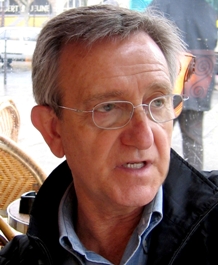 |
|
|
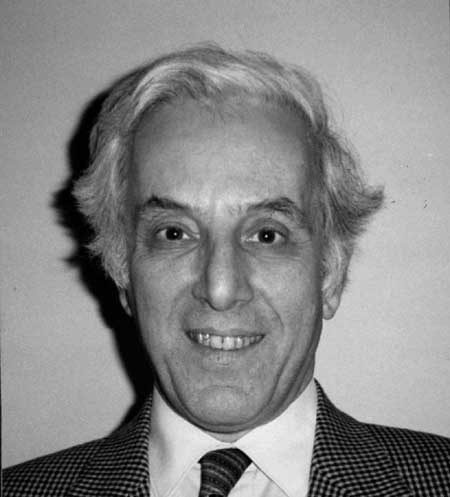
Michael Jackson |
|
|
| The Open University |
| Chair: Tetsuo Tamai, University of Tokyo |
| Problems, Solutions and Requirements |
| We speak easily of software engineering and of requirements engineering, implicitly inviting
comparison of our discipline with those of the established branches of engineering. How are requirements and specifications
related to implementations or solutions? How is innovation related to reliance on well-tried norms? How is specialisation
related to general principles of requirements engineering? What can case studies tell us about proposed development methods?
What is the place of formalism in developing software-intensive systems? The books of Vincenti, Petroski and other established
engineers have much to teach us as we look back over fifteen years of requirements engineering conferences and consider these
fundamental questions. |
| Biography |
|
Michael Jackson has worked in computer software since 1961. Since 1989 he has worked as an independent consultant and
researcher in software development method.
He has described his work in many papers and in four books: Principles of Program Design (1974);
System Development (1983); Software Requirements & Specifications (1995); and Problem Frames (2001).
He has held a number of visiting posts at universities in England and Scotland. He is currently a visiting research Professor at
the Open University and a visiting Fellow at the University of Newcastle.
His home page is at: http://mcs.open.ac.uk/mj665/ |
 |
Jean-Pascal van Ypersele |
|
|
| Université Catholique de Louvain-la-Neuve, Vice-Chair of IPCC Working Group II |
| Chair and Discussant: Steve Easterbrook, University of Toronto |
| Climate change: Challenges and Opportunities for Software Requirements Engineering |
| Climate change is happening now, and climate modelling and data analysis shows that it is mostly as a result of greenhouse gases (GHG) from human activities. Impacts will be important, with most damages in developing countries, but developed countries will be affected too. Together with lifestyle and behaviour changes, known technologies and policies can reduce GHG emissions at reasonable costs, but effective policies, including an effective carbon-price signal are required. The IPCC (Intergovernmental Panel on Climate Change), which just received the Nobel Peace Prize with Al Gore produces the most reliable set of assessed information about climate change in all its dimensions. Developed countries, with GHG emissions per capita that are up to twenty times larger than the quantity natural systems are able to absorb (using equitable per capita distribution) are confronted to a huge challenge. Climate-friendly policies offer opportunities to move our economy and social systems towards a more sustainable model of development. Software controlling machines and buildings that have a direct impact on environment can play an important role to reduce energy usage, and therefore emissions. Software used to model climate has become extremely important to understand climate behaviour and attempt to project it in the future. Quality matters in both cases, and some of the related challenges will be discussed. |
| Biography |
Jean-Pascal van Ypersele (1957, Belgium), has a Ph. D. in physics from the «Université
Catholique de Louvain-la-Neuve», where he teaches climatology and environmental sciences,
and directs the Master programme in Science and Management of the Environment.
He made his doctoral research in climatology at NCAR (National Center for Atmospheric Research, Colorado, USA).
He specialized in modelling climate and the climate effects of human activities, and has recently worked on the impacts of climate
change.
He is Vice-Chair of the Working Group II of the IPCC, Intergovernmental Panel on Climate Change,
which shared the 2007 Nobel Peace Prize with Al Gore), and participates regularly to the United Nations conferences on climate issues, as
scientific advisor. He chairs the Energy & Climate Working Group of the Belgian Federal
Council for Sustainable Development.
He lectures frequently to a variety of audiences, and is regularly interviewed by the media on climate issues. Among other prizes,
he received in 2006 the «Energy and environment award» from the International Polar Foundation.
His home page is at: www.climate.be/vanyp
E-mail:
|
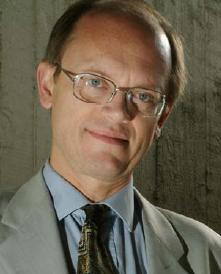
Photo: Frédéric Deleuze (UCL) |
|
|
